If you’ve ever stood at a merch table — or in front of a rack at a music retailer — and wondered whether the $35 Iron Maiden tee hanging next to the $65 version is actually different, or just a different price tag, you’re asking exactly the right question. “Official” band merchandise (meaning items made with the direct legal approval of the artist or their estate, as opposed to unlicensed or bootleg prints) spans an enormous range of quality, from thin single-stitch shirts with washed-out prints that crack after six washes, to heavy-gauge garments with screen prints so clean they read as contemporary streetwear. For two of the most merchandised bands in heavy music history — Iron Maiden and Black Sabbath — that range is especially wide, because both catalogs have been licensed, sub-licensed, reissued, and counterfeited across five decades. This guide breaks down the actual differences: what the tags tell you, how to read print quality, which specific cuts collectors and resellers are actually chasing, and when the premium price on either band’s garments is justified versus when you’re paying for a name on a mediocre blank.
Reading the Tag: What Licensing Tiers Actually Mean
The neck tag on a band tee is more legible than most buyers realize. For both Iron Maiden and Black Sabbath, official product flows through a small number of licensed channels, and each channel produces garments with distinct physical signatures.
Iron Maiden’s merchandise operation is famously centralized. Phantom Music Management — Maiden’s long-running management entity — maintains tight control over licensed merch partners. The primary official channel for retail-distributed product in 2025–2026 is Bravado, Live Nation’s global merchandise division. Bravado-produced Maiden tees typically carry a “Bravado” or “Official Licensed Product” tag alongside a copyright line citing “Iron Maiden Holdings Ltd.” The blanks Bravado defaults to in this tier are Gildan Heavy Cotton or Alstyle equivalents — adequate but unremarkable, in the 180–185 gsm (grams per square meter, a weight measurement for fabric) range. These are the shirts you find at Target, Hot Topic, or chain music retailers.
The tier above that — what collectors are actually tracking — is Maiden’s direct-to-fan and tour-exclusive product, which since approximately 2022 has increasingly shifted toward heavier blanks. Across Maiden-focused collector communities, observers have noted consistent use of higher-weight jersey in the 200–220 gsm range with noticeably tighter knit on webstore exclusives. These carry different interior tags, sometimes without the Bravado mark, and frequently include Eddie-referencing catalog codes on the hem tag that serve as informal authentication signals to collectors. Kerrang!, in its 2024 feature “The Complete Guide to Official Band Merchandise,” specifically identified Maiden’s webstore as the higher-quality channel compared to chain retail, noting that the construction signals on direct-to-fan drops are meaningfully different from mass-distributed stock.
Black Sabbath’s licensing situation is more fragmented, which is both an opportunity and a risk. The band’s catalog — including Ozzy-era imagery, Dio-era imagery, and the Heaven and Hell variant — is administered through multiple overlapping agreements. Sanctuary Records held a significant portion of the licensing estate for years; that portfolio has passed through several hands and portions are currently managed through BMG Rights Management. As Revolver Magazine documented in its 2024 feature “The Merch Table Economy: Who Profits and Who Gets Left Out,” this fragmentation means that fully licensed Sabbath product can originate from Bravado, from independent boutique licensees, and from estate-adjacent agreements with retailers like EMP Merchandising in Europe, each producing garments to different specs. The tag is your first filter: look for explicit copyright attribution to “Black Sabbath Ltd.” or estate credits tied to specific members rather than generic “licensed product” language.
Print Quality: What Separates a $35 Tee from a $90 One
Print quality is where the real differentiation lives, and it’s readable with nothing more than your eyes and hands.
Plastisol vs. water-based ink is the foundational split. Plastisol (a PVC-based ink that sits on top of the fabric and has a slight raised texture when you run your fingers across it) is the industry standard for mass-produced band tees. It’s durable but has a tendency to crack at fold lines after repeated washing, and it creates a visual “thickness” that reads as lower-end to collectors who’ve handled enough garments. Water-based inks — and their more premium variant, discharge printing (which dyes the fabric itself rather than coating it) — produce a print that feels like part of the garment, maintains vibrancy through more wash cycles, and carries a matte, soft-hand finish that streetwear buyers specifically prize.
Highsnobiety, in its 2025 feature “Why Band Tees Are the New Streetwear Grail,” documented the pattern clearly: Iron Maiden’s tour-exclusive and webstore pieces from 2023 onward have increasingly shifted to water-based and discharge methods on Eddie graphic tees, particularly the “Killers” and “Number of the Beast” era artwork, where the halftone dot work in Derek Riggs’s illustrations benefits dramatically from softer ink deposit. The mass-retail Bravado product for both bands largely remains plastisol.
Black Sabbath product, because of its licensing fragmentation, shows more variance. Boutique licensee editions — particularly those produced through EMP or through independent UK-based print shops operating under estate agreements — have a stronger track record for water-based execution on cross-and-logo pieces. The Ozzy-era “Never Say Die” and Dio-era “Heaven and Hell” artwork, where large flat color areas dominate, actually tolerates plastisol better than detailed illustration work does, which partially explains why collectors report fewer print-quality complaints on those specific designs.
Tier-by-Tier Comparison: Budget, Mid, and Premium
Budget Tier: Mass Retail (Bravado / Chain Stores)
Both Iron Maiden and Black Sabbath have significant presence in this tier — Hot Topic, Target, and chain music retailers carry Bravado-produced stock for both bands year-round. The blank weights run 180–185 gsm, construction is single-needle at sleeve and hem, and plastisol printing is standard. These retail between $30 and $45. For Iron Maiden, the most common designs in this tier are the classic “Trooper Eddie” and “The Trooper” single-image fronts. For Black Sabbath, the cross logo and “Masters of Reality” text tees dominate the floor. Print life is acceptable — owners report 30–40 wash cycles before cracking becomes noticeable if garments are cold-washed and line-dried — but resale value is minimal, with ceilings typically between $35 and $55 on the secondary market.
Metal Injection, in its 2023 piece “Bootleg vs. Official: How to Spot the Difference,” noted that the mass-retail tier for legacy metal bands has improved modestly over the past decade in terms of print registration accuracy (a measure of how precisely multi-color screens align), but that blank quality has not kept pace, leaving a gap that more discerning buyers feel immediately when handling garments.
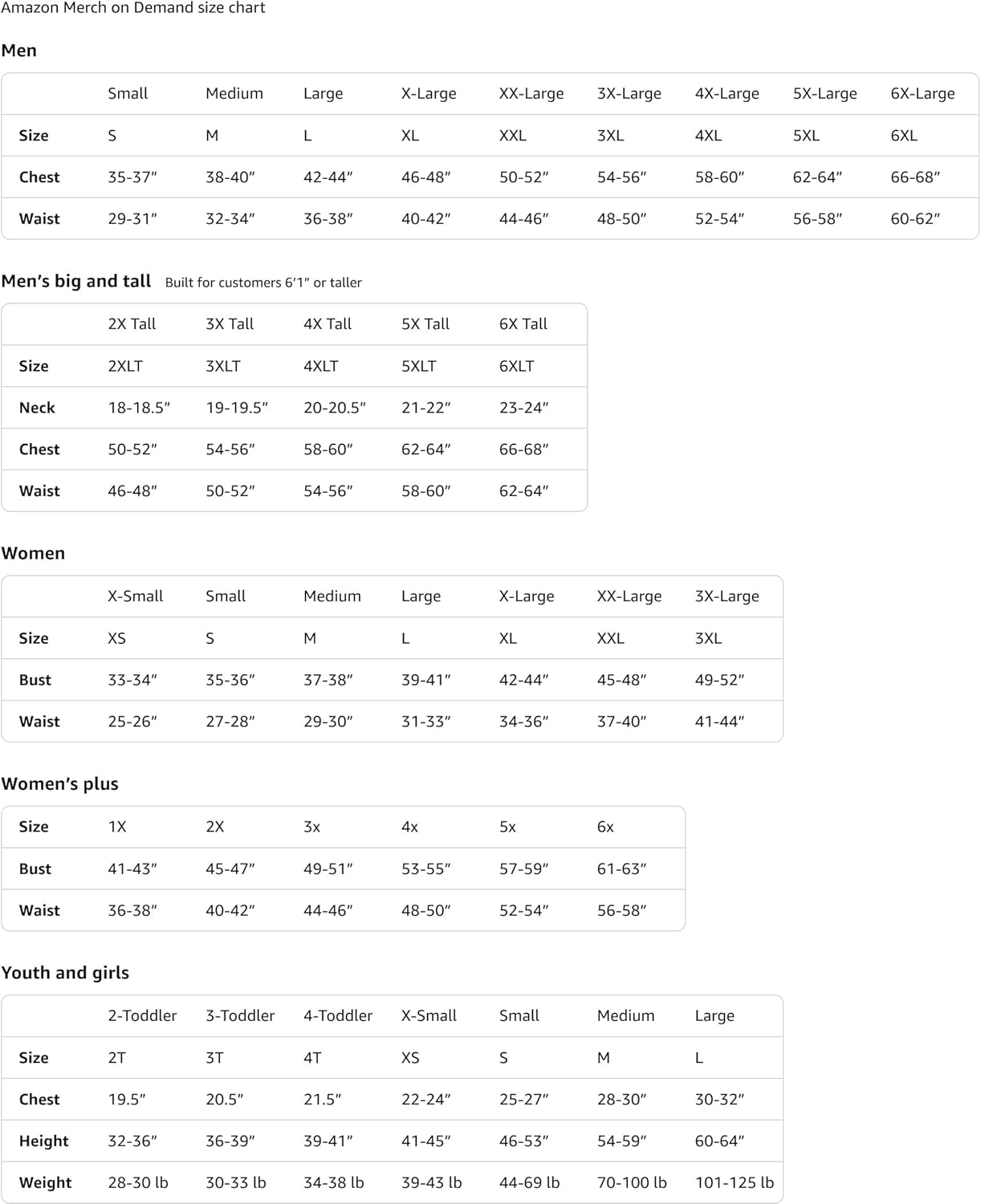
Black
$24.99
In stock on Amazon
Check price on AmazonMid Tier: Webstore Exclusives and Tour Merch
This is where the meaningful quality jump lives for Iron Maiden specifically. Webstore and tour-exclusive Maiden product — typically priced between $55 and $85 retail — shows a consistent step up in blank weight (200–220 gsm), moves toward double-needle stitching at hem and cuff, and on selected Eddie-art designs uses water-based or discharge printing that gives the illustration work a fundamentally different hand feel and visual depth. Kerrang!‘s 2024 merch guide flagged the Maiden webstore as the channel where the brand’s quality intentions are most legible, distinguishing it from the Bravado mass-retail pipeline. Resale on desirable limited colorways and design variants in this tier runs $80–$160 within 18–24 months of a limited drop.
For Black Sabbath, this tier is less consistent. EMP Europe’s estate-adjacent exclusive product tends toward double-needle construction and occasionally achieves water-based print execution, but the licensing fragmentation Revolver Magazine documented means there is no single reliable pipeline comparable to Maiden’s webstore. Buyers in this tier should verify copyright attribution on the tag before committing at $60 or above.
Black
$24.99
In stock on Amazon
Check price on AmazonPremium Tier: Boutique Licensed, Collab Pieces, and Verified Vintage NOS
The top of the current official market is occupied by boutique licensee editions — independent print shops operating under explicit estate agreements, occasionally producing small-run collab pieces in the $90–$150 retail range on blanks in the 220–260 gsm range, using discharge or specialty screen techniques that approximate the soft-hand quality of genuine vintage tour stock. For Iron Maiden, these pieces occasionally surface through licensed collaborations with independent streetwear labels; for Black Sabbath, boutique licensee activity is more concentrated in the UK and European market.
Above current official product sits a separate category: verified vintage NOS (new old stock — genuinely vintage unworn inventory) pieces from the late 1970s through early 1990s. As Metal Injection’s “Bootleg vs. Official” analysis noted, a genuine 1984 Powerslave tour single-stitch tee is not “official” in the modern licensing sense, but it carries provenance that no current Bravado product can replicate. Collectors operating in the $150–$400 tier are often choosing between a current boutique-licensed premium piece and a verified vintage single, and the vintage single wins on cultural artifact value almost every time — even with faded print and worn seams. Hypebeast’s 2025 feature “Legacy Band Tees and the Streetwear Collector Crossover” identified this NOS category as the primary driver of price escalation in legacy metal merch, with both Maiden and Sabbath NOS pieces achieving consistent premiums among buyers who entered the category through streetwear rather than through record stores.
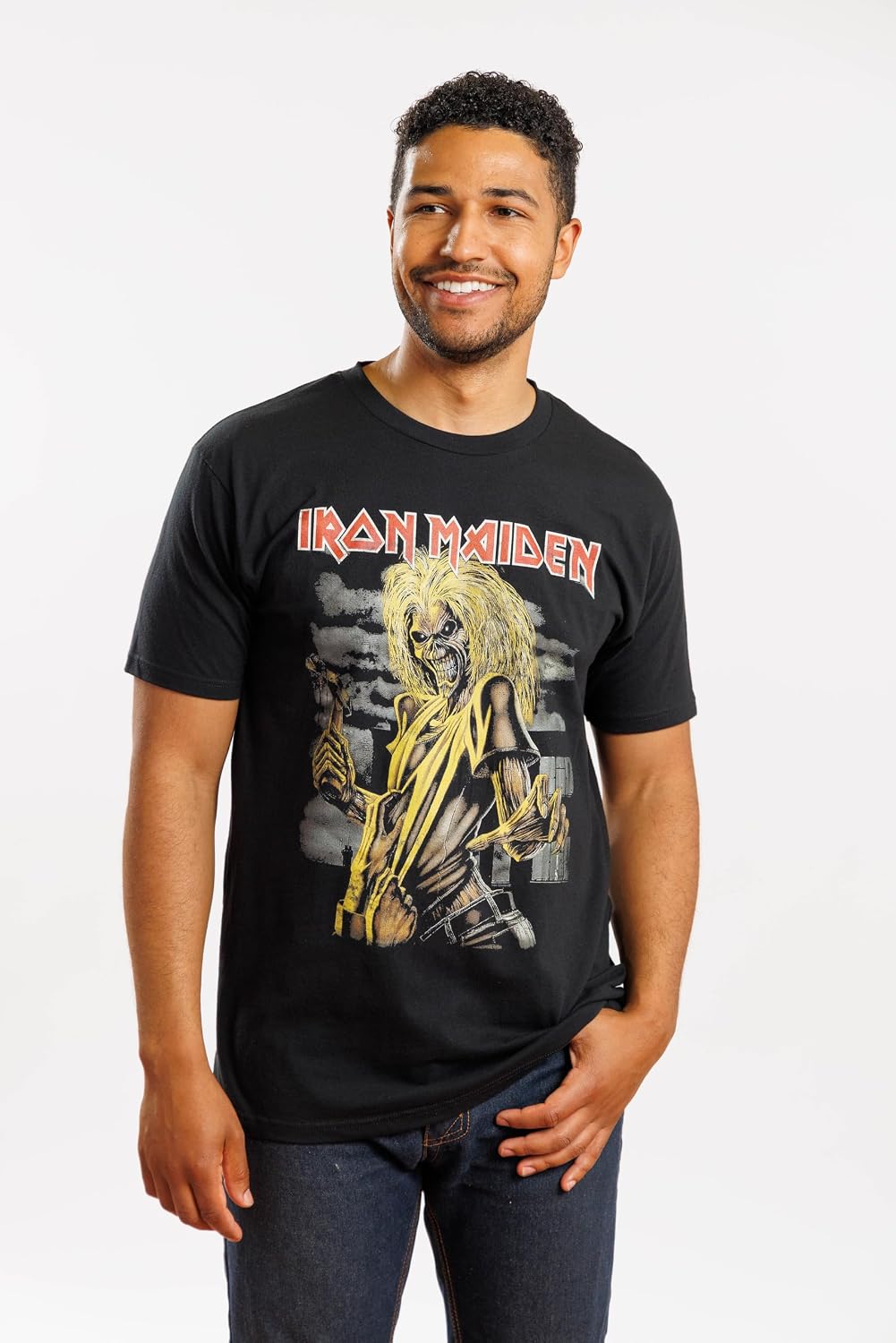
Iron
$27.95
In stock on Amazon
Check price on AmazonDecision Framework: Which Cut to Buy and When
Given a live purchase decision, here is the explicit logic:
If your goal is everyday wear without obsessing over resale, the Bravado mass-retail product for either band at $30–$45 is defensible. The print holds acceptably through 30–40 wash cycles with proper care; the blank is unremarkable but wearable. Don’t expect it to appreciate.
If your goal is a piece that reads as intentional in a streetwear or collector context, target Iron Maiden’s webstore-exclusive or tour-exclusive drops. The construction signals are there — heavier blank, better print execution, discharge or water-based ink on key designs — and the Eddie iconography has developed genuine crossover legibility with buyers who came up through limited-drop culture rather than record stores. Budget $55–$90 retail.
If your goal is Black Sabbath and you’re spending $60 or more, be explicit about which licensing channel you’re buying from before committing. EMP Europe and boutique licensees with explicit estate attribution are the better construction bet. If the piece doesn’t carry clear estate copyright attribution on the tag, the licensing provenance is ambiguous — which matters for resale, because experienced buyers on collector resale platforms are reading that tag too.
If you’re sourcing for resale or boutique retail, the math currently favors Maiden over Sabbath on turnover velocity in the $80–$150 range. Maiden’s merchandise infrastructure produces cleaner provenance signals; Sabbath’s fragmented licensing creates authentication friction that slows transactions and compresses margins. The exception is verified vintage NOS Sabbath product from pre-1990 — if you can authenticate it, the ceiling is substantially higher and buyer demand is less price-sensitive.
The short version: Iron Maiden’s official infrastructure currently produces more consistent quality signals across its tiers than Black Sabbath’s does. Black Sabbath’s ceiling is higher on vintage product but requires more due diligence on current official releases. Neither band’s mass-retail tier is worth paying a premium for — but both bands have product above that tier worth chasing if you know what to look for.