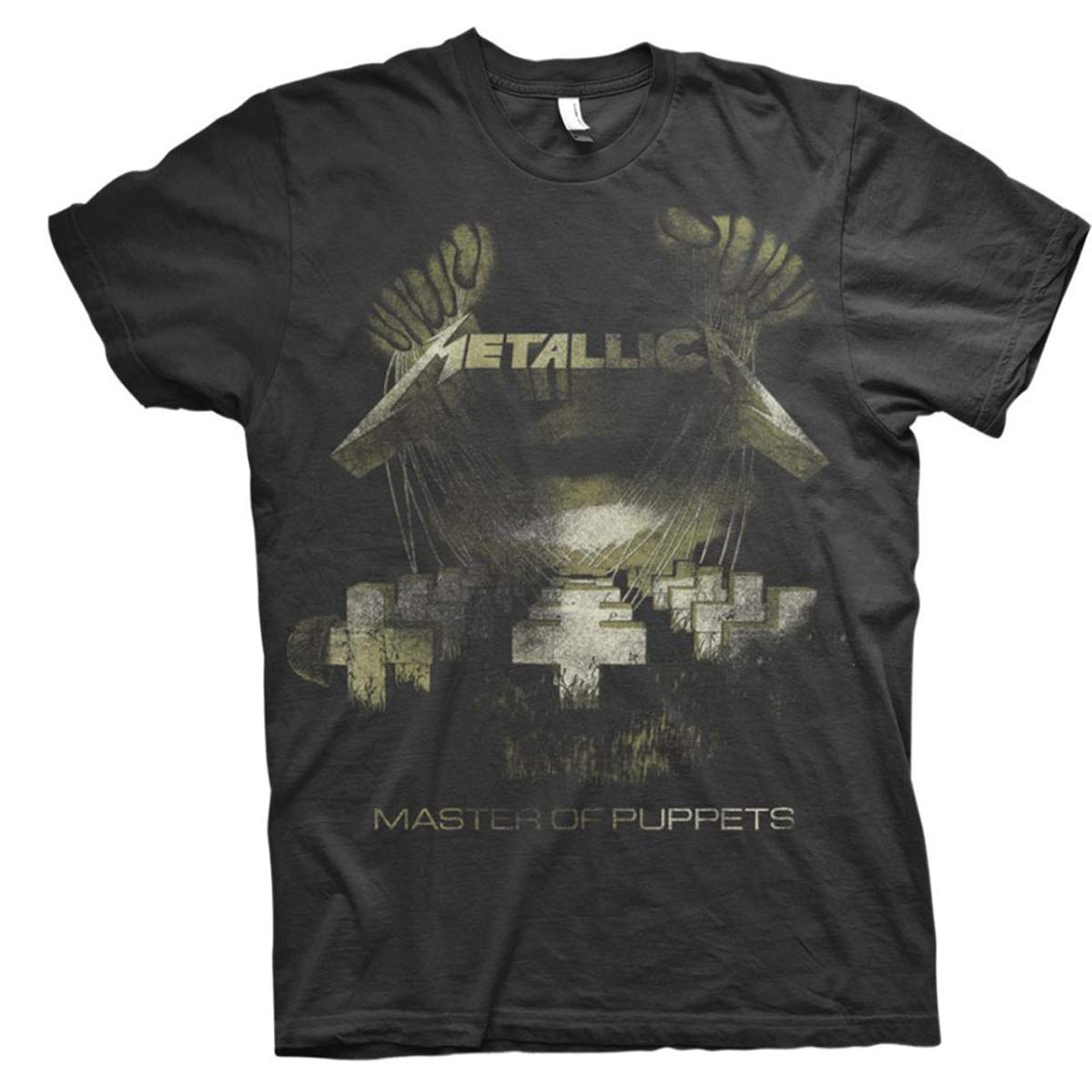
If you’ve ever picked up a band shirt at a show, worn it a handful of times, and watched the logo turn into a cracked, peeling ghost of itself — you already understand the problem this article exists to solve. A band tee (a T-shirt printed with a band’s artwork or logo) is the most visible piece of merchandise in heavy music, but “Metallica” printed on the chest doesn’t tell you anything about whether the shirt will survive a year of washes. What actually matters is the fabric weight (how thick and dense the cotton is, measured in GSM — grams per square meter), the printing method (screen print vs. direct-to-garment vs. heat transfer), and construction details like stitching and hemming that most buyers never think to check. This guide ranks the major tiers of Metallica merch available in 2026 by those criteria, so you can spend your $30–$150 with real information instead of just buying whatever has the biggest skull.
Why Metallica Merch Is the Perfect Case Study
Metallica occupies a rare position in the band-merch ecosystem: they simultaneously produce mass-market product at scale (venue merch tables, Hot Topic, mainstream retail) and legitimately collectible limited-edition pieces through their own Metallica.com store and licensing deals with elevated streetwear-adjacent labels. That range — from a $28 Gildan-blank show shirt to a $140 collaborative heavyweight tee — makes them ideal for studying what you actually get at each price point, and where the construction quality either justifies or betrays the cost.
As Revolver Magazine noted in their coverage of the band-merch-as-collector’s-market trend, Metallica is now one of the few legacy metal acts whose merch reliably appreciates on secondary platforms like Grailed when the print and construction are right. The inverse is also true: poorly constructed Metallica shirts from mass-market runs circulate endlessly at a $15–$25 ceiling because no serious buyer will go higher for a shirt that’s already showing print degradation.
The tradeoffs here are real and worth naming explicitly before we go tier by tier.
The Construction Signals That Actually Predict Longevity
Before the tier breakdown, you need a shared framework. Here are the four variables that determine whether a graphic tee holds up — and what to look for in a Metallica shirt specifically.
Fabric weight (GSM). Standard mass-market band tees run 150–160 GSM. At this weight, the fabric is thin enough that screen-print ink sits on top of the weave rather than bonding into it, which accelerates cracking. Mid-weight shirts in the 180–200 GSM range (think: Comfort Colors, Bella+Canvas 3001) offer a noticeably better hand feel and longer print life. Heavyweight blanks at 220 GSM and above — used by premium streetwear labels — are the tier where the shirt itself becomes a durable garment rather than a temporary vehicle for an image. Highsnobiety’s coverage of the graphic-tee premium market consistently identifies 220+ GSM as the threshold where resale value becomes defensible.
Print method. Screen printing (ink pushed through a mesh stencil, layer by layer) is the gold standard for durability when done correctly — the ink bonds into the fabric rather than sitting on top. The tell for quality screen printing is opacity and edge definition at washing: a well-executed screen print holds its blacks after 30+ washes. Direct-to-garment (DTG) printing produces photographic detail but is less durable on cotton without proper pre-treatment, and degrades faster on cheaper blanks. Heat-transfer printing — used in a lot of fast-turn licensed product — is the weakest method and identifiable by the slight plastic sheen and the way the edges lift at the corners after washing.
Construction details. Double-needle stitching at the hem and sleeve cuffs (two parallel rows of thread) is a durability signal that costs manufacturers slightly more and gets skipped on budget runs. Side-seam construction (a seam running down each side of the shirt) holds its shape under wear and washing; tubular construction (the cheaper method, where the shirt is knitted as a continuous tube) tends to twist after repeated washing. Collar ribbing quality matters too — a thin, single-layer collar collapses; a reinforced or double-layer collar recovers.
Print coverage and placement. Large full-front graphics on thin fabric create a specific failure mode: the ink adds stiffness to the shirt in the print area, and repeated folding at the same crease lines (which happens in drawers and backpacks) creates cracking exactly where the image is most important. Oversized prints on heavyweight blanks distribute that stress better because the base fabric has more body to support the ink layer.
By the Numbers
| Tier | Typical Blank | GSM Range | Print Method | Price Range | Secondary Market Ceiling |
|---|---|---|---|---|---|
| Mass-market show shirt | Gildan 5000 / generic | 150–160 | Screen print (1–2 color) | $28–$40 | $15–$25 |
| Mid-tier licensed retail | Bella+Canvas / Comfort Colors | 180–200 | Screen print (multi-color) | $45–$70 | $35–$55 |
| Official store limited run | Brand-specific heavyweight | 200–220 | Screen print + specialty ink | $65–$110 | $80–$160 |
| Streetwear-collab / designer-adjacent | Custom heavyweight blank | 220–280 | High-coverage screen print | $100–$150+ | $120–$300+ |
Tier-by-Tier Breakdown: Where the Money Goes
Mass-market show shirts ($28–$40). These are the shirts you buy at the venue because you forgot to order ahead and you want something to wear tomorrow. The blank is almost always a Gildan 5000 or equivalent, running 155–160 GSM. The print is typically a one- or two-color screen print that looks great on the rack under venue lighting and starts showing stress at the cracking stage within six to twelve months of regular wear and washing. The construction is tubular, the collar is thin, and the hem stitching is single-needle. None of this is a scandal — it’s what the price supports. If you’re buying for the memory, that’s a legitimate reason. If you’re buying because you think it’ll hold up or appreciate, it won’t. These shirts have a hard secondary ceiling around $20–$25 unless the specific design or tour date has scarcity value that overrides condition.
Mid-tier licensed retail ($45–$70). This is where Metallica’s official store and better licensed retail (think: higher-end department store or specialty music-merch boutiques) sit for standard releases. The blank upgrade to Bella+Canvas or Comfort Colors territory (180–200 GSM) is immediately noticeable in hand feel — the shirt drapes differently, feels more substantial, and the heavier weave gives screen-print ink more surface to bond with. Owners who track their merch over time consistently report that shirts in this blank tier hold print integrity noticeably longer before cracking appears. The construction is usually side-seamed at this tier, and double-needle hems are common. These are buyable on spec because the quality-to-price ratio is defensible.
Official store limited runs ($65–$110). Metallica’s direct store has run specialty items — numbered tour variants, anniversary prints, collaboration-adjacent pieces — that use heavier blanks, sometimes custom-spec’d to the label’s own requirements. Print quality on these runs typically involves higher ink coverage, more color layers, or specialty techniques like discharge printing (which removes dye from the fabric to create a soft, vintage look rather than adding an ink layer on top). The result is a shirt where the print is integrated into the fabric rather than sitting on it, which is the single biggest durability upgrade available in screen printing. Kerrang!‘s coverage of Metallica’s 2024–2025 touring merchandise cycle noted that the band’s own store runs frequently sell out within 24–72 hours and begin appearing on secondary platforms at 1.5–2x retail almost immediately, which is a real market signal about perceived construction and scarcity value.
Streetwear-collab and designer-adjacent tier ($100–$150+). This is the tier where Metallica licensing intersects with the elevated-construction world that Hypebeast covers when it discusses premium graphic tees. Collaborations with labels that operate at this price point use blanks in the 220–280 GSM range — sometimes custom-weight — with construction details (reinforced collars, chain-stitch hems, garment dye over the completed shirt) that are borrowed from Japanese workwear and American heritage manufacturing. The print at this tier is often a single or two-color high-opacity screen print that lets the fabric quality speak for itself rather than compensating with visual complexity. Owners of shirts in this category report they wear and wash like a proper garment — the fabric softens over time, the print settles rather than cracks, and the collar keeps its shape. Secondary market data on Grailed as of early 2026 shows that confirmed Metallica collab tees from premium streetwear partners frequently trade at $120–$300+ depending on condition and colorway scarcity.
The Decision Frame: If X, Then Y
Here’s where this lands practically, for someone with a specific buying decision in front of them right now.
If you’re buying for a single event or the sentimental value of “I was there”: The mass-market show shirt is the correct choice. Don’t overthink it. Buy the one with the design you like, not the one that looks the most substantial.
If you’re buying to wear regularly for 2–3 years: The mid-tier licensed retail range is the sweet spot. The blank quality alone justifies the price delta over a show shirt, and you’ll spend less time managing a degrading print.
If you’re buying with any expectation of secondary market value: Skip everything below the official store limited-run tier. Secondary market buyers on Grailed price condition ruthlessly, and a cracked print on a $35 blank kills resale value entirely. A limited run on a 200+ GSM blank, in good condition, in a design with documented scarcity, is the floor for anything worth reselling.
If you’re buying as part of a broader streetwear-crossover collection or as a genuine collectible: The collab tier is the only tier with real upside. The construction holds condition, the scarcity is baked in, and the premium-label association gives the piece a ceiling that pure Metallica merch doesn’t reach on its own. Per Revolver Magazine’s analysis of the band-merch collector market, the crossover between metal iconography and streetwear construction is still early enough that well-chosen pieces from this tier are undervalued relative to where the market is heading.
The rule is simple: buy one tier higher than you think you need, because the print quality difference between a $40 shirt and a $70 shirt is visible at six months, and the construction difference between a $70 shirt and a $120 shirt is visible at three years.