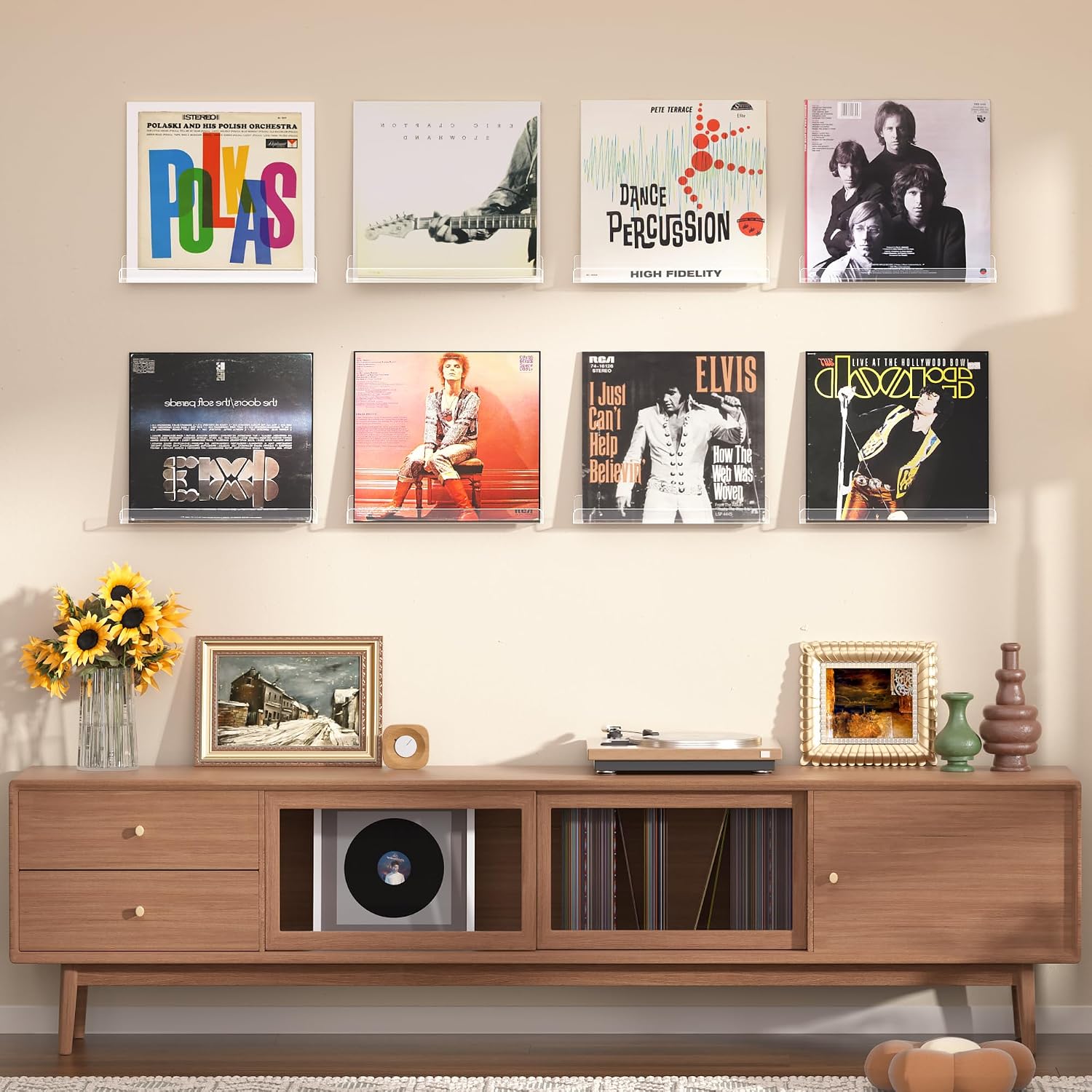
If you’ve ever cracked open a limited-edition colored vinyl record — the kind pressed in translucent red, galaxy swirl, or bone white at a run of three hundred copies — you already know it’s not just a music delivery format. It’s an object. Labels like Deathwish Inc. and Bridge Nine design these pressings to be looked at, not only played, and the people buying them are often as interested in the visual artifact as in the audio. “Colored vinyl” simply means the PVC compound used in pressing has been tinted or marbled rather than left black; the result is a record that photographs beautifully, holds resale value, and sits at the intersection of music culture and visual art. The problem is that displaying a record — mounting it on a wall, propping it on a shelf, leaving it out in a “now playing” orientation — introduces real risks: warping from heat, UV fading on the label and the vinyl itself, scratching from improper contact, and sleeve degradation from moisture or pressure. This guide maps the tradeoffs across every display category so you can make a decision that fits your setup and your budget without accidentally wrecking a pressing you waited six months to land.
Why Colored Vinyl Has Different Display Stakes Than Standard Black Pressings
Standard black vinyl is essentially carbon-filled PVC — the carbon pigment acts as a mild UV stabilizer and makes surface scuffs harder to see at a glance. Colored and clear pressings don’t have that buffer. The Vinyl Factory’s care guide explicitly flags that translucent and colored pressings are measurably more susceptible to UV degradation over long exposure periods, and Analog Planet’s coverage of pressing plant practices notes that the dyes used in colored runs can shift or fade under direct sunlight within a single summer if a record is mounted on a south- or west-facing wall.
The practical tradeoff is this: the visual drama that makes a galaxy-swirl pressing worth displaying is the exact property that makes it fragile to the conditions you’re most likely to display it in. A record hung near a window above a turntable looks great on your Instagram story. In two years, the label may show yellowing and the translucent sections may have taken on a slight haze. That matters both aesthetically and financially — Consequence of Sound’s colored vinyl guide notes that condition-grading platforms like Discogs are increasingly granular about UV damage on colored pressings, separating “unplayed but displayed” copies from sealed stock when pricing variants at the $100–$300+ tier.
The second risk factor is warping. Vinyl becomes pliable starting around 140°F (60°C), but subtle long-term deformation — a dish warp or edge curl — can develop at lower sustained temperatures when a record is held under asymmetrical pressure or stored at an angle without full support. This is the wall-mount problem: a standard single-point mount (a wire ledge or a nail-hook bracket that grips only the record’s edge) applies uneven pressure over time, particularly on 180g pressings that are heavier and more subject to creep.
By the numbers:
- UV-induced color shift on unprotected colored vinyl: documented in as little as 90–180 days of direct sun exposure (The Vinyl Factory)
- Warping risk onset temperature: ~140°F / 60°C for PVC; ambient wall temps near heat vents can reach 100–110°F in winter
- Average resale depreciation on a “displayed, unsleeved” /300 colored pressing vs. sealed: 25–40% on Discogs as of mid-2026 pricing trends
- Recommended display distance from direct sunlight: minimum 36 inches per most pressing plant care documentation
Wall Mounts: What the Market Offers and Where Each Format Fails
The dominant product categories in wall mounting are wire ledge rails, acrylic cradle mounts, full-cover acrylic frames, and floating nail hooks. Each involves a different set of compromises.
Wire ledge rails (the horizontal wall-mounted shelf style, often sold in multi-packs) are cheap and visually minimal, but owners across aggregated Discogs forum discussions consistently flag the same problem: the record rests on a thin metal wire at two contact points on the bottom edge, which concentrates pressure. On a standard black pressing that gets rotated regularly, this is a minor issue. On a 180g colored pressing displayed indefinitely, that contact point becomes a potential surface abrasion site, especially if the rail has any roughness or if the record shifts slightly with wall vibration. Our read: wire rails are acceptable for sleeve-forward display (record inside its jacket, jacket resting on the rail) but should not contact bare vinyl directly.
Acrylic cradle mounts — the style that holds the record from the bottom in a curved plastic trough — distribute pressure over a wider surface and are generally regarded by display-focused collectors as the better contact-point solution. The tradeoff is that cheap acrylic can itself scratch vinyl if it has any manufacturing flash or particulate contamination on the contact surface. Reviews across collector communities consistently recommend inspecting the contact surface under light before first use and optionally lining it with a thin microfiber strip if any roughness is present.
Full-cover acrylic frames — essentially a record-sized picture frame that sandwiches the sleeve and/or bare record behind a UV-filtering acrylic panel — are the most protective option and the most expensive. Highsnobiety’s coverage of vinyl-as-object culture specifically calls out this format as the natural choice for the collector who is treating pressings as display art rather than rotating listening copies. The UV-filtering acrylic (look for specs indicating 98%+ UV blocking) addresses the fading problem directly. The cost runs higher, and the aesthetic is more “gallery” than “lived-in,” which may or may not match your space.
Floating nail hooks — a single nail or screw anchor that passes through the center spindle hole of the record — are the most photographed format on social media and the most mechanically risky. The record hangs from a single point at the center hole, meaning the full weight (80–180 grams depending on pressing weight) is suspended from a 1/4-inch hole edge. On a standard black pressing, the spindle hole is reinforced by the label and is structurally adequate for short-term display. On a lightweight colored pressing in a warm room, this is a long-term warp waiting to happen. Operator reports in long-running Discogs collector threads are consistent: spindle-hole mounting is fine as a photo-shoot setup, not as a permanent display method for anything you want to keep in graded condition.
If X, then Y — wall mount decision rule:
- If the record is a permanent display piece (not going back to regular play) AND you’re near windows → full-cover UV-filtering acrylic frame, sleeve inside
- If you’re rotating between display and play AND the wall is away from direct light → acrylic cradle mount with a microfiber liner check
- If you want minimal visual hardware AND the record stays sleeved → wire ledge rail with the jacket as the contact layer
- If you saw it on Instagram and the hook goes through the spindle hole → treat it as temporary only
Tabletop Stands: The ‘Now Playing’ Setup Done Right
The “now playing” stand — a small tabletop display that holds the record currently on your turntable, typically leaning near the platter — has become a standard part of the collector aesthetic. The functional problem it solves is real: without a stand, the record you just played either goes back in the sleeve immediately (correct but inconvenient) or leans against the wall or turntable (risky). Tabletop stands formalize the resting position.
The primary categories are wire easel stands, acrylic slot stands, and wooden cradle stands.
Wire easel stands are the least expensive and most flexible — they’re essentially the same format used for displaying plates or small paintings, and they hold records at a comfortable viewing angle without contact on the playing surface. The knock against them is stability: a lightweight wire easel can tip on a vibrating turntable surface. If your turntable is on an isolated shelf or a dedicated stand, this is a non-issue. If your turntable shares a surface with a subwoofer or is in a high-traffic area, aggregated owner reports suggest the added footprint mass of a heavier acrylic or wood stand is worth it.
Acrylic slot stands hold the record upright in a narrow channel cut into the acrylic base. They’re clean-looking and stable, and the slot design means the only contact is a thin line at the record’s bottom edge — less pressure than a full cradle. The risk: if the acrylic slot has any roughness (common in cheaper versions), it will scuff the vinyl at the contact edge over repeated insertions. As with wall-mount acrylic, a visual inspection before first use is the minimum standard.
Wooden cradle stands — often sold by small craft vendors — tend to have the best contact surface geometry and the most aesthetic alignment with the warm-materials look many collector spaces go for. The tradeoff is material variance: untreated wood can expand and contract with humidity, potentially tightening the cradle grip on the record in humid summer months. Operators running dedicated listening rooms with climate control don’t face this problem; everyone else should look for finished or sealed wood versions.
The Sleeve Question: Display Sleeved or Bare?
This is the decision with the highest resale consequence. A colored pressing displayed bare (outside its inner sleeve, outside its jacket) is exposed to every environmental risk discussed above and accumulates micro-scratches from air particulate contact over time. The Vinyl Factory’s care documentation is unambiguous: records not actively being played should be in their inner sleeves, which should be inside the jacket. The visual case for bare display is obvious. The preservation case is equally obvious in the other direction.
The collector-pragmatist compromise is to display the jacket in a wall mount or tabletop stand, and keep the record itself sleeved inside. You get the visual artifact on the wall — the art, the spine, the label design visible through a clear outer sleeve — without exposing the pressing surface to UV, particulate, or contact abrasion. For /300 variants and test pressings where condition grade is a financial variable, this is the only defensible long-term approach.
The Decision Framework
The display setup that fits your collection depends on three variables: your proximity to light sources, whether the record is a permanent display piece or a rotating listening copy, and your resale horizon. A collector holding test pressings as appreciating assets should treat display as a temporary photographic activity, not a permanent state. A collector building a room aesthetic around colored vinyl as visual art should invest in UV-filtering framing and accept that those records are now collection objects rather than listening copies — and price their replacements accordingly. Everyone in between is making a tradeoff. Name it explicitly before you put the nail in the wall.