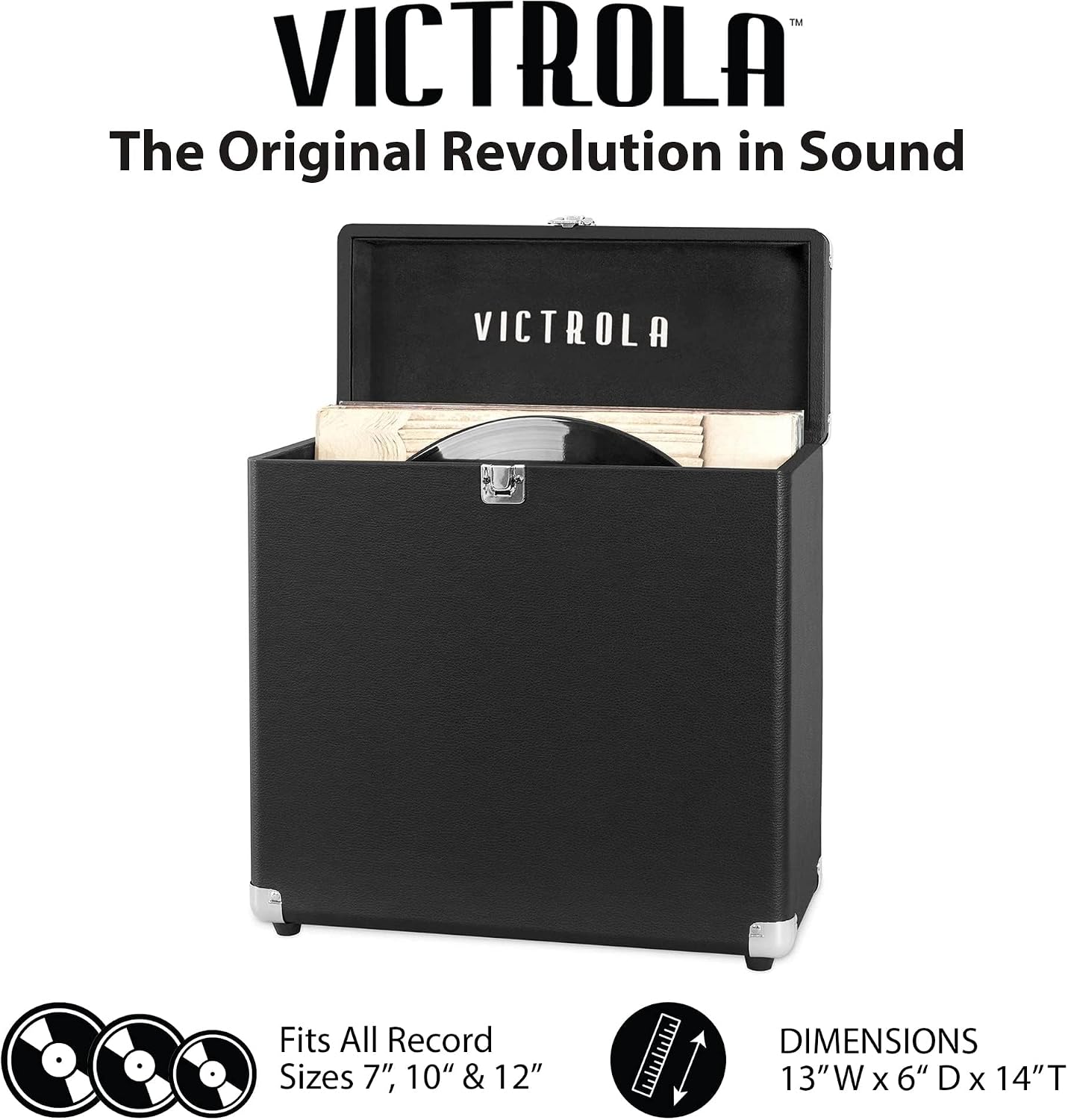
If you’ve ever bought a limited pressing — the kind that comes in a numbered edition of 300 or 500 copies, sometimes on colored vinyl, sometimes on heavier-than-standard wax — you already know that the record itself is only half the investment. The other half is keeping it in the condition it arrived in. Vinyl records (the physical format where music is pressed into grooved plastic discs that a needle reads) are surprisingly sensitive to heat, humidity, pressure, and the wrong kind of sleeve material. A copy that plays without surface noise and grades VG++ (near-mint in collector language, meaning essentially unplayed) is worth meaningfully more on the resale market than the same pressing with visible scuffs or ring wear (the circular indentation a record cover leaves on a sleeve when stacked carelessly). This guide walks through the storage decisions that actually matter — the ones that separate a preserved artifact from a degraded disc — and gives you a clear framework for where to spend and where to save.
Why Storage Conditions Eat Into Pressing Value Faster Than You’d Expect
Most intermediate collectors have the obvious bases covered: they know not to leave records in a hot car or store them flat (which causes warping under their own weight over time). But the degradation that quietly kills resale value is subtler than that, and it compounds over months, not days.
Static and sleeve migration are the two biggest offenders at the intermediate level. Static electricity attracts dust to the groove surface, which causes the low-level crackling you hear on records that were fine when they arrived but degrade with every play or even just with repeated handling. Sleeve migration — a chemical interaction where the wrong inner sleeve material actually bonds with or transfers surface residue onto the vinyl — is documented in preservation literature from the Library of Congress’s “Care, Handling, and Storage of Audio Visual Materials” guidance, which specifically flags PVC (polyvinyl chloride) inner sleeves as a long-term hazard. The original paper sleeves that come inside many releases are not much better: they shed microscopic fibers directly onto the playing surface.
Ring wear and seam splits are the other value destroyers, and both come from how records are stored rather than how they’re played. When records lean at an angle in a crate or shelf — not fully vertical, not perfectly supported — the covers slowly deform under lateral pressure. A record that ships graded M (mint, meaning sealed or essentially unplayed) and develops even light ring wear during storage loses a full grade tier in most collector assessments. That matters when you’re selling a $200 test pressing or a hand-numbered box set that commands a premium specifically because of condition.
The Vinyl Factory’s storage guide notes that the single most effective intervention most collectors can make is moving from original paper inners to properly anti-static poly or rice paper sleeves — a change that costs roughly $0.20–$0.50 per record but has an outsized effect on long-term groove preservation.
The Sleeve Stack: What’s Actually Worth Buying
This is the area where the math is most clearly in your favor, and where a lot of collectors are still underinvesting.
Inner sleeves are the first line of defense. The standard upgrade path goes: original paper → polyethylene (PE) → rice paper or HDPE (high-density polyethylene) anti-static sleeves. Analog Planet’s sleeve buyer’s guide draws a clear distinction between standard-gauge PE sleeves (functional but not anti-static) and the higher-grade HDPE or rice paper options that actively discharge static rather than just avoiding PVC’s chemical migration problem. For a collection where individual records carry $80–$300+ replacement value, the premium tier inner sleeve — which runs roughly $40–$60 per 100 units at current 2026 pricing — is straightforward cost-benefit math.
Outer sleeves matter more than most people acknowledge. A standard 3-mil polyethylene outer sleeve protects against dust and minor abrasion but does essentially nothing against humidity or seam splits. The 4-mil option (slightly thicker, noticeably stiffer) is the working standard among serious collectors; it holds the cover’s shape under shelf pressure and makes ring wear significantly less likely. For releases where the cover art is part of the value proposition — screen-printed gatefolds, letterpress-printed jackets, art-book-style packaging from labels like Southern Lord or Sargent House — moving to 4-mil outers is not optional if you’re planning to resell.
A note on PVC: Some imported and vintage outer sleeves are still made with PVC content, which off-gasses and can cloud or yellow over time. Owners of older collections consistently report this problem with budget-tier sleeves sourced from generic distributors. Pure polyethylene or polypropylene is the specification to look for.
By the Numbers
| Sleeve tier | Typical cost per 100 units | Best for |
|---|---|---|
| Standard paper inner (original) | ~$0 (included) | Nothing — replace these |
| Standard PE inner | ~$12–18 | Budget collections, common pressings |
| HDPE / rice paper anti-static inner | ~$40–60 | Any pressing $50+ replacement value |
| 3-mil PE outer | ~$15–22 | Basic dust protection |
| 4-mil PE outer | ~$25–35 | Collector-grade, resale-focused storage |
Shelving: Vertical Storage, Weight Distribution, and the Bin-to-Shelf Transition
Once sleeves are sorted, the physical shelving decision is where most intermediate collectors are leaving money on the table — not because they’re storing records flat (most know better) but because they’re storing them at an angle without realizing it.
The fully vertical rule sounds simple: records should stand at 90 degrees, perpendicular to the shelf surface, with consistent lateral support so they’re not leaning. In practice, this is harder than it sounds. A partially filled shelf, a crate with too much empty space, or a leaning divider all create the slow angular pressure that causes warping over longer time horizons. The fix is either shelf dividers — rigid partitions that hold records vertical in sections — or keeping shelves consistently full enough that records support each other laterally without leaning.
Weight and shelf span matter at scale. A standard 12-inch LP weighs roughly 150–180 grams for a standard pressing, 180–200 grams for a 180g audiophile pressing. At 50 records per linear foot, a three-foot shelf span carries 22–27 kg of dynamic load. Pitchfork’s collector guide flags that particleboard shelving (the standard material in most furniture-store shelving units) sags measurably under sustained loads of this kind, which creates the same angular pressure problem as an underfilled shelf — just from the opposite direction. Solid wood or metal shelving at shelf spans under 30 inches is the recommendation that comes up consistently in serious collector contexts.
Temperature and humidity get discussed a lot but are frequently misunderstood. The Library of Congress preservation guidelines specify a relative humidity range of 30–50% and temperature stability (avoiding cycling, not just targeting a specific number) as more important than hitting a precise temperature. A room that swings from 60°F to 80°F seasonally is more damaging than one that consistently sits at 72°F, because expansion and contraction cycles stress both the vinyl and the laminated covers. A basic humidity monitor (hygrometer) in your storage room costs under $20 and removes the guesswork entirely.
Basement storage deserves a specific callout because it’s a common default for serious collectors with large collections: basements frequently cycle into humidity ranges above 60% in warmer months, which is the threshold where mold becomes a real risk on covers and inner sleeves. If basement storage is unavoidable, a dehumidifier in the space is non-negotiable for any collection with meaningful replacement value.
The Resale-Condition Decision Framework
Here’s where this gets tactical for the reader who has a collection with real dollars at stake.
If you’re buying to hold and resell within 1–3 years, the sleeve investment is your highest-ROI storage decision. A $0.50 per record upgrade on a 200-record collection costs $100 total and protects the grade integrity of pressings that individually represent $50–$300 in resale value. The math is not close. Prioritize HDPE inner sleeves for everything $50+, 4-mil outers for anything with collector-grade packaging, and replace originals on anything you’ve graded as NM or better.
If you’re archiving for the long term — test pressings, hand-numbered variants, box sets you don’t expect to move for 5–10 years — add humidity control and proper shelving to that foundation. The sleeve cost scales linearly with collection size; the shelving and environmental cost is largely fixed, which means it gets cheaper per record as the collection grows.
If you’re a boutique distro operator or small-label merch director buying inventory for resale, the operational calculus is slightly different: you need sleeves for everything you’re grading as new or NM, but you’re also moving product on a faster cycle. The 3-mil outer is probably sufficient for shorter storage windows; the HDPE inner upgrade still makes sense for anything hand-numbered or variant-pressed, where condition grade is part of the price justification.
The clear decision rule: if the record’s replacement cost exceeds $50, the sleeve upgrade is not optional — it’s insurance with a 100x return on cost. Everything below that threshold can run standard PE inners and 3-mil outers without meaningful risk to long-term value.
The Vinyl Factory and Analog Planet both make the same underlying point in their respective storage coverage: the collectors who regret their storage decisions are almost never the ones who overspent on sleeves. They’re the ones who bought a shelving unit that sagged, stored records in a room that flooded, or kept original paper inners in a pressing they meant to flip at peak market. The infrastructure cost is low relative to what it protects. Get the sleeves right first, get the shelving right second, and the environmental controls will largely take care of themselves in a normal living space — unless you’re dealing with a basement or climate extremes, in which case a $40 dehumidifier is the cheapest insurance policy in collecting.